
Reading the Ruff
How court dress challenged an auction room attribution
25 September 2026 · Patrick ten Cate
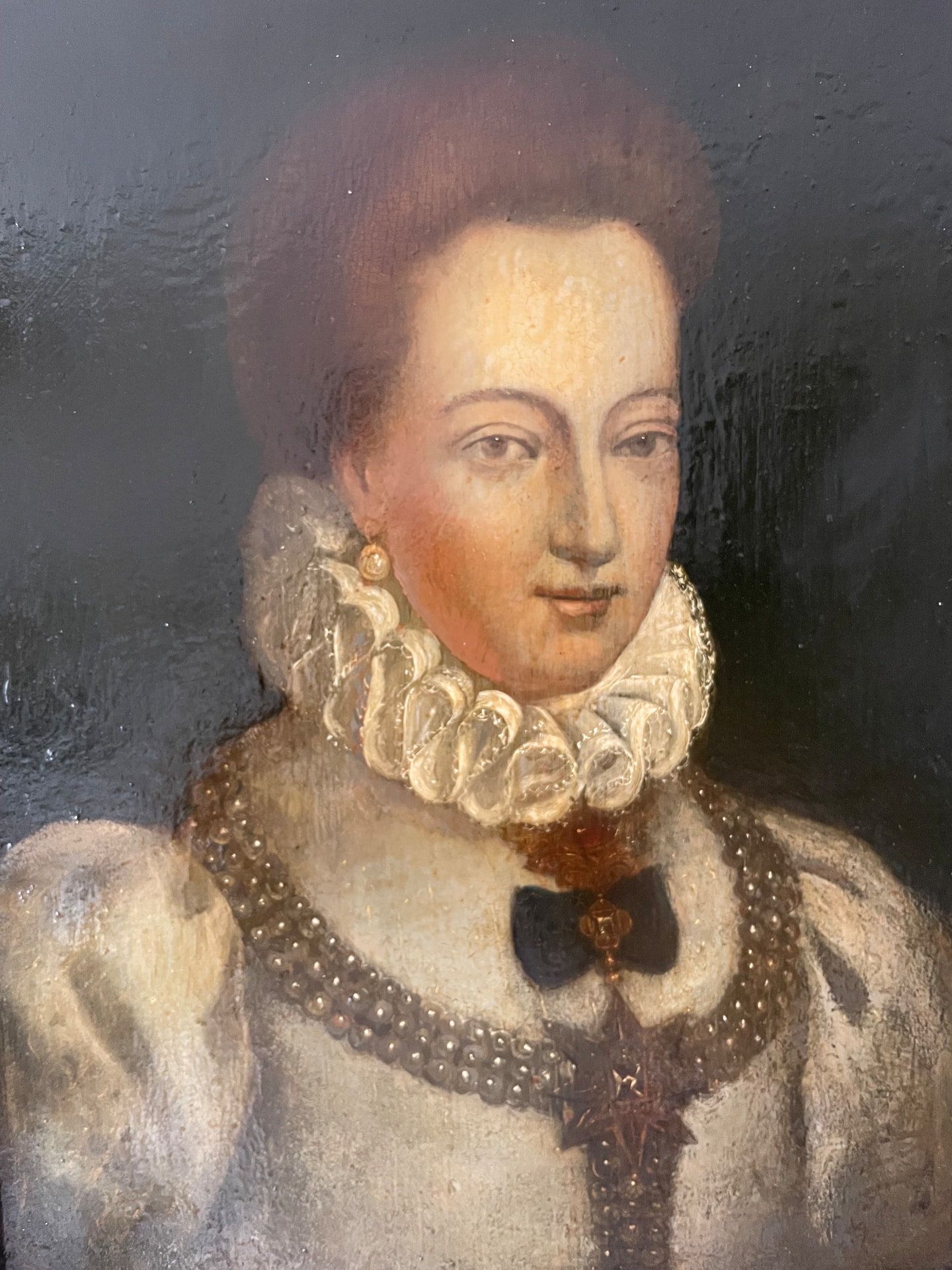
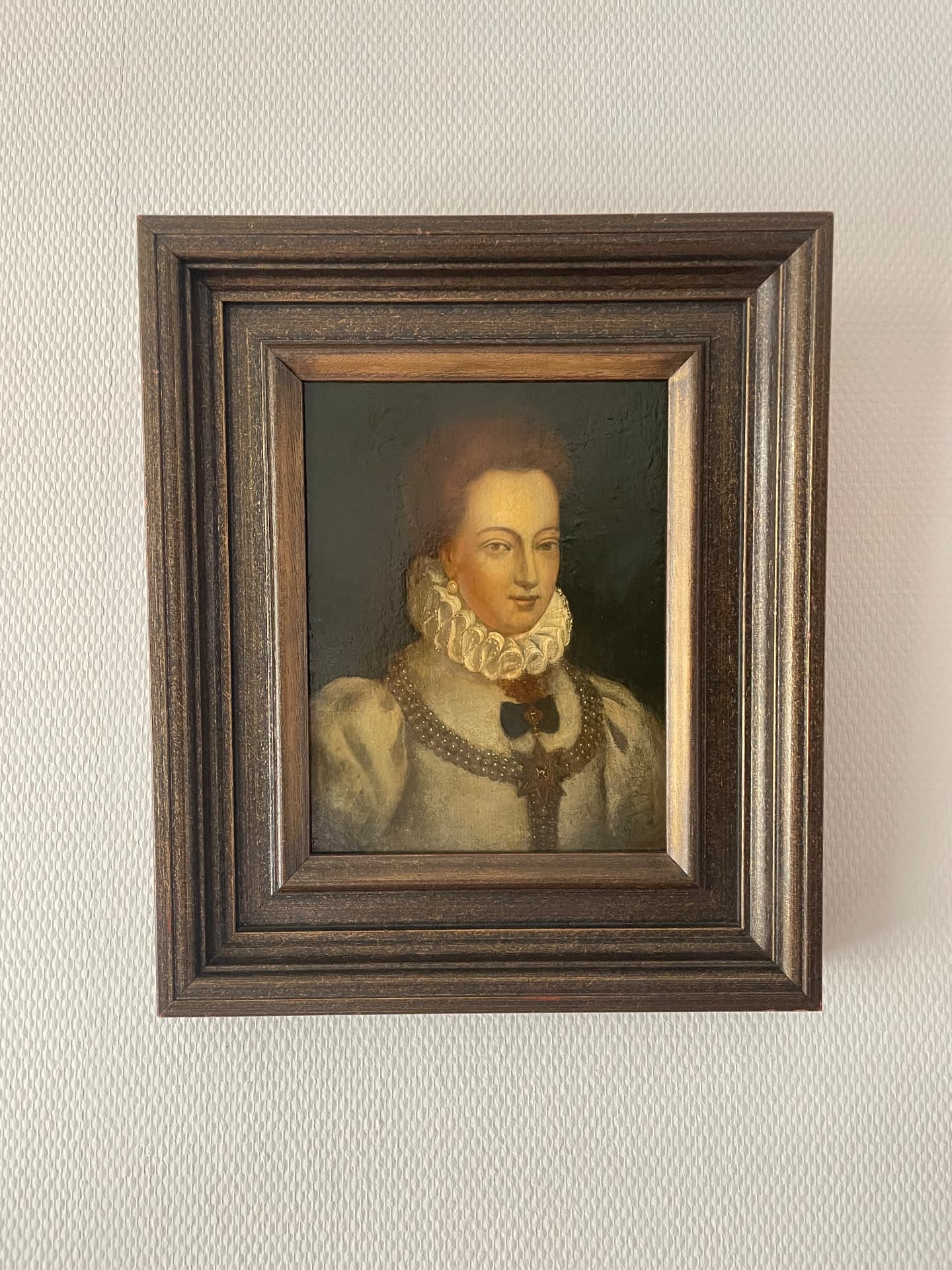
The panel today
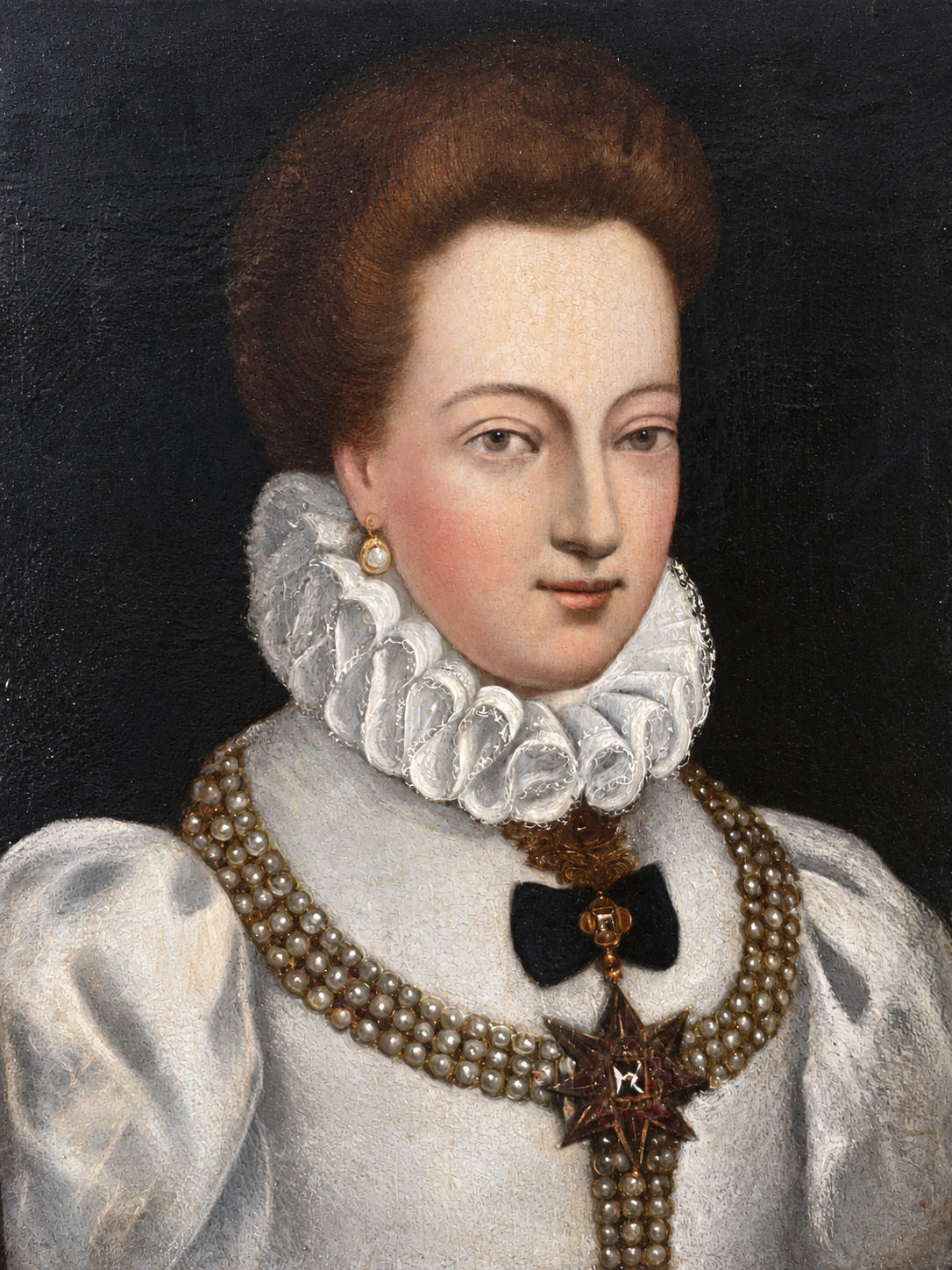
Digital cleaning visualisation
Auction catalogues are useful, but they are not final verdicts. This small oil on panel was offered as an eighteenth century portrait, possibly of Sarah Churchill, Duchess of Marlborough. The label did not sit comfortably with what was in front of us.
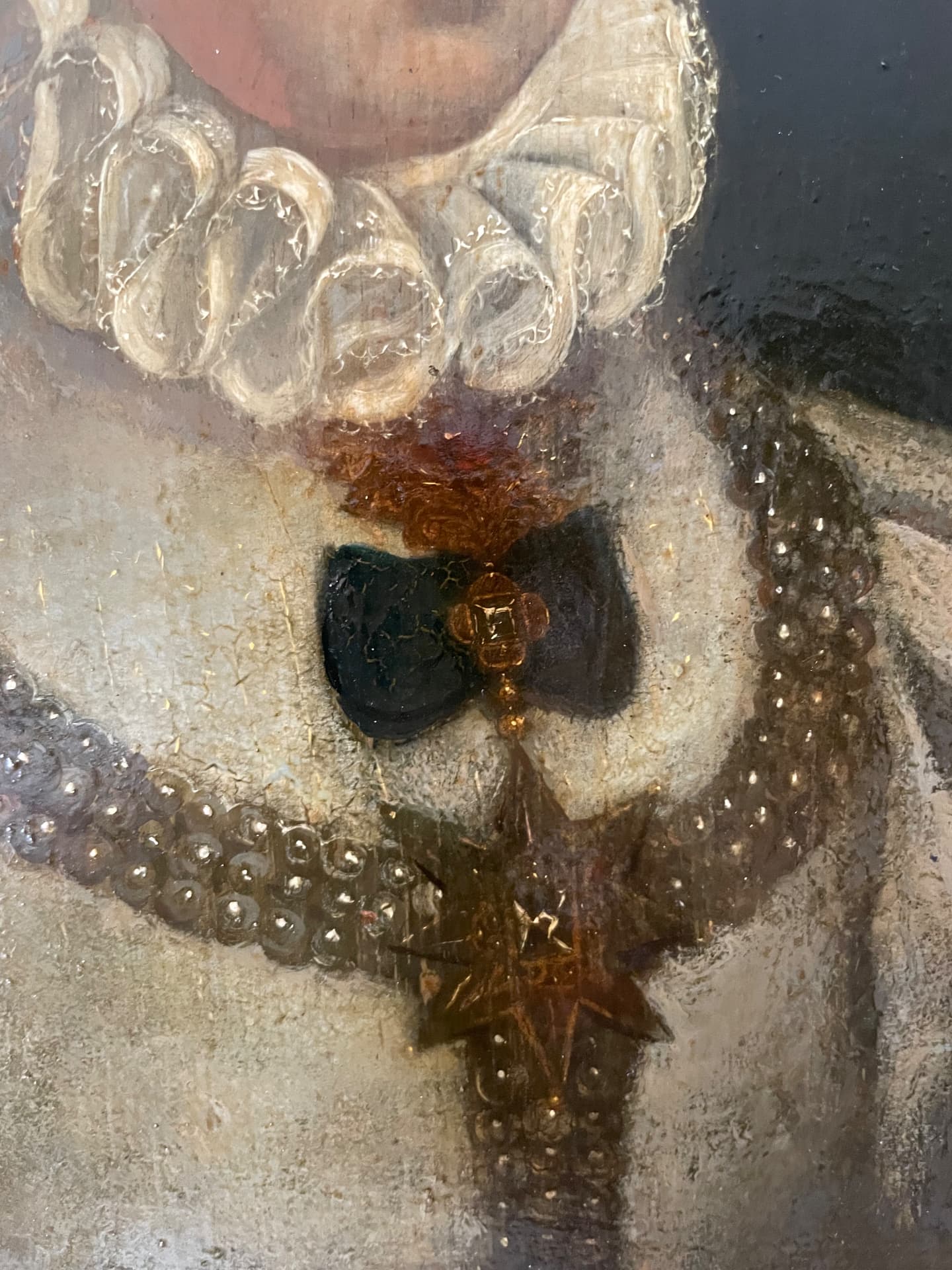
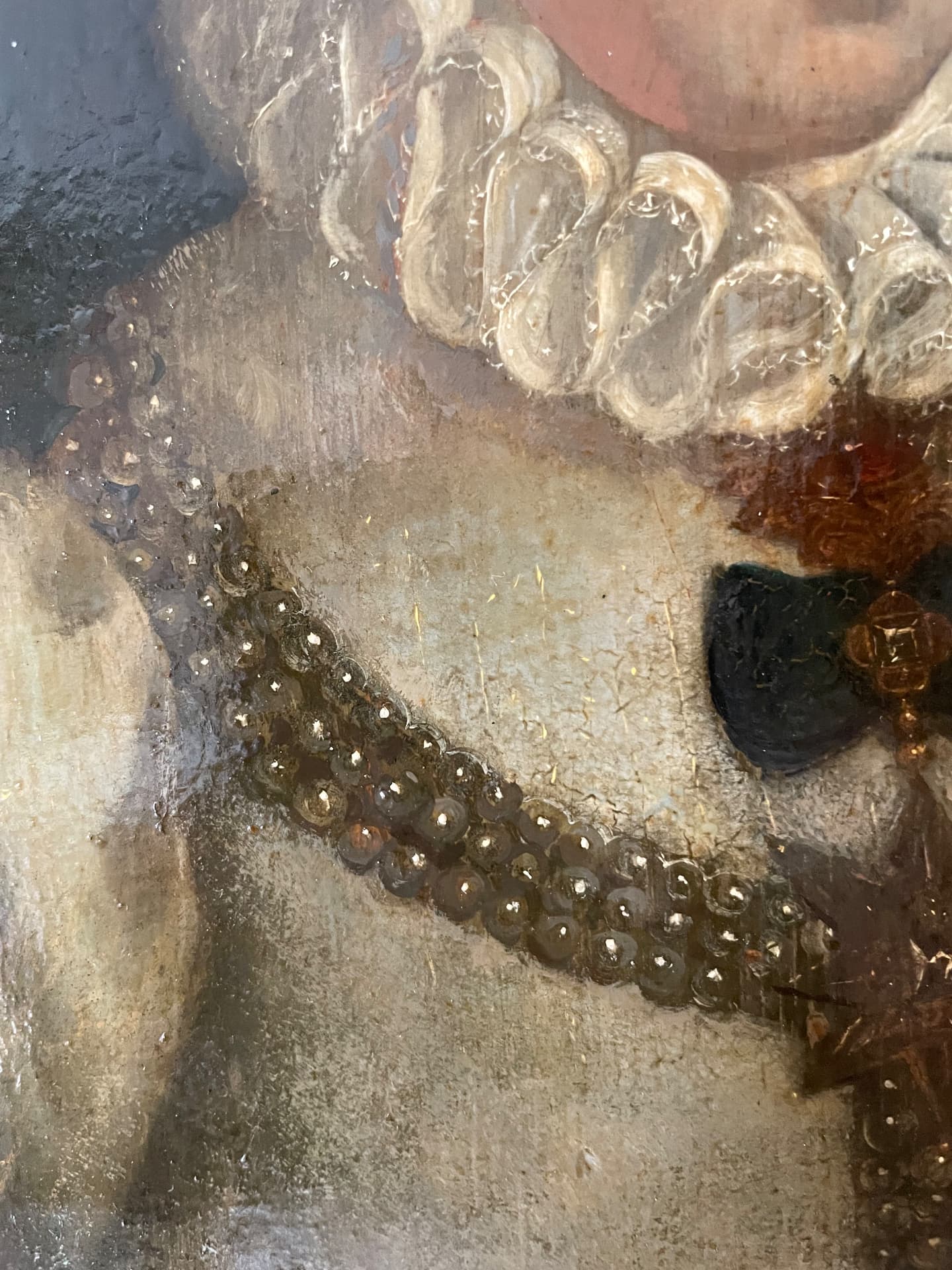
The first clue was the clothing. The sitter wears a broad, carefully constructed white ruff above a pale, rigid bodice. Pearls follow the neckline and a dark ribbon ornament sits at the centre. This is not the relaxed silhouette of an English portrait from Sarah Churchill’s lifetime. It belongs to an earlier and more formal court language.
Fashion as evidence
Dress can be one of the most precise witnesses in a portrait. The Spanish court established a powerful visual code built around controlled posture, structured clothing, costly textiles and jewellery. Its influence travelled widely through dynastic marriages and court networks. By the end of the sixteenth century, Spanish black and white court colours were fashionable across Europe.
The ruff is especially significant. It frames the face as an emblem of rank and discipline. Comparable portraits of Infanta Isabel Clara Eugenia and Catalina Micaela show how white collars, precious stones and pearls were used to make status immediately legible. Our portrait is much smaller and more intimate, but it speaks the same visual language.
Who is she?
Who the sitter is remains an open question. The dress places her firmly in the world of the Spanish Habsburg court, among the ladies and noblewomen of the imperial and royal households, but the costume establishes a social and chronological context more readily than it establishes identity. A portrait does not become a likeness of a queen because it borrows her wardrobe, and no name can be attached to our sitter responsibly at this stage. What the comparison does tell us is that she belonged to the circles where this dress was worn, and that the panel was painted for a viewer who could read that language at a glance.
The panel itself matters too. Its construction, ground and paint layers may help locate the work more securely, and the fine craquelé of the surface sits comfortably with such an early dating. Close inspection shows a small area of retouching at the lower edge of the jawline on the right cheek, a modest intervention that does not affect the reading of the composition. Examination under magnification and, where appropriate, technical imaging will be more valuable than forcing an early conclusion.
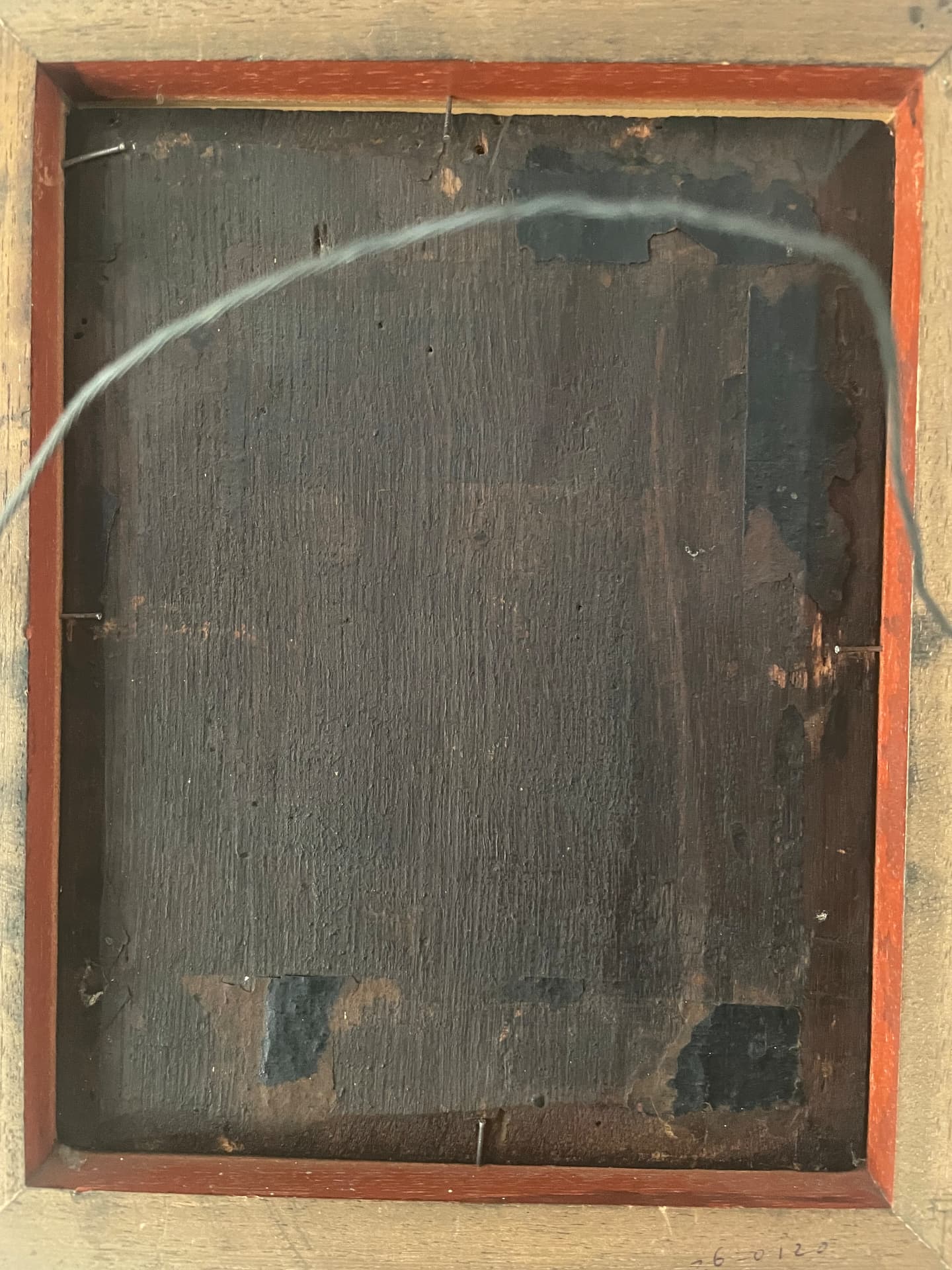
The reverse of the panel adds its own quiet evidence. It shows old oak, bevelled at the edges, with an even, age-appropriate patina and old, darkened ground layers. Nothing on the back suggests a later alteration or a modern addition. In our view the support is entirely consistent with a sixteenth-century origin, and it is one more reason the eighteenth-century auction label never convinced us.
A modern gallery’s research tools
TenCate Art combines traditional connoisseurship with modern research methods. We compare costume, support, technique and known portrait types. We consult museum collections and archival records. We also use artificial intelligence carefully, as a visual aid rather than an authority.
For this painting we made a digital cleaning visualisation to test how the composition might read if the darkened surface were reduced. It does not predict the exact result of conservation and it does not replace the judgement of a paintings conservator. It helps us ask better questions before any intervention is considered.
Comparative studies
The international language of court dress
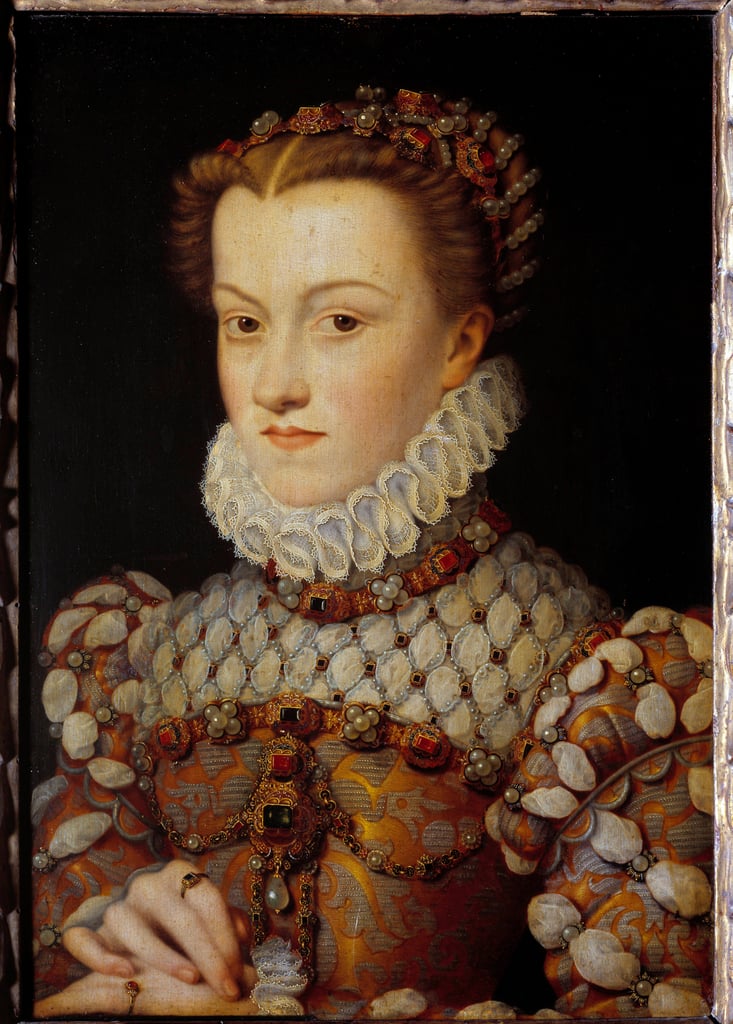
A comparison only works when the sitters wear the same language of dress. Place our panel directly beside François Clouet’s portrait of Elisabeth of Austria and the two speak the same tongue. Both women wear the millstone ruff, pearls and a pendant jewel hanging from the necklace, the same combination recorded on our panel. This is a comparison of costume rather than of identity: the carefully documented dress of the Louvre portrait offers direct historical evidence for the ruff, structured bodice, pearls and jewellery that shaped elite court appearance, and shows our sitter moved in exactly those circles.
Spotting what the catalogue missed
Misattributions are not always spectacular errors. They often begin with an object being placed in the wrong century, after which every later observation is made through that label. Looking without the label is part of the dealer’s work.
Here, the ruff, bodice, pearls and panel all invite us to move backwards in time. Whether the sitter proves to be connected to the Spanish, Austrian or French court remains open. That uncertainty is not a weakness. It is the honest starting point of research.
Where the evidence leads us
Taken together, the costume, the jewellery, the panel and the craquelé suggest a single coherent picture. The combination of a broad millstone ruff worn above an open neckline, a double strand of pearls and a pendant jewel is, as far as we can establish, a phenomenon of the third quarter of the sixteenth century and the decades that follow. We find it in Clouet’s portrait of Elisabeth of Austria of circa 1571 and in the portrait of Maria of Austria of 1557, and it fades from fashion in the final years of the century. Nothing we can observe on the panel asks for a date after circa 1595.
Our working reading is therefore a portrait of the second half of the sixteenth century, most plausibly painted between circa 1570 and 1590, within the sphere of Spanish Habsburg court fashion. The sitter herself we leave unnamed: a noblewoman close to the Habsburg court, painted for an audience that could read her rank in her dress. Elisabeth of Austria’s portrait serves us as evidence of what that world wore, not as a claim about who our lady was. We present this as a considered reading rather than a conclusion. Technical examination and further provenance research may yet refine or correct it, and we will publish what we find.
Selected comparisons
- Kunsthistorisches Museum Vienna, Maria of Austria, 1557
- François Clouet, Elisabeth of Austria, Queen of France, circa 1571, Musée du Louvre
- Museo Nacional del Prado, Infanta Isabel Clara Eugenia, 1577
- Museo Nacional del Prado, Margaret of Austria, Queen of Spain, 1607
- The Metropolitan Museum of Art, Sofonisba Anguissola, Portrait of a Noblewoman, 1570 to 1573
- The Metropolitan Museum of Art, Spanish skirt front, circa 1600